2026 Alishan Food Guide | Which Should You Pick: Must-Try Tsou Cuisine, Scenic Restaurants, or High-Mountain Café? Your Complete Budget Guide in One Place!

- What Should You Eat in Alishan? 5 Must-Try Dishes at a Glance!
- Where Can You Eat Tsou Cuisine in Alishan? How Should You Order Wild Boar, Bamboo Rice, and Millet Wine?
- Which Restaurants Inside the Alishan Park Area Are Worth Recommending?
- Which Shizhuo Food Spots Are Worth Trying? Is It Really Worth the Detour?
- Is the Fenqihu Lunchbox Really a Must-Try, or Is It Just Photogenic?
- How Should You Plan Breakfast, Lunch, and Dinner in Alishan?
- Where Can Vegetarians Eat in Alishan? Are There Many Options?
- How Should You Choose Alishan High-Mountain Coffee?
- Can You Eat on the Alishan Forest Railway? What Are the Rules?
- How Much Are Alishan Attraction Tickets? What Should You Budget in Total After Entering the Park?
- How Should You Plan an Alishan Food Map? One-Day vs. Two-Day Itineraries
- Alishan Food FAQ
- A Word from the tripool Editor: What Are the 2 Best Ways to Master Alishan Food with Less Stress?
When visiting Alishan, most people don’t just want to know which Alishan attractions are worth seeing, they also want to know what good food Alishan actually has to offer. That’s why “best food in Alishan” is one of the most searched terms online. The problem is that most articles just repeat the same shortlist: wild boar, bamboo rice, and that’s about it. Hardly anyone tells you which restaurants are really worth the wait, how much you should budget, or whether vegetarians will have anything to eat.
What makes it even trickier is that Alishan’s dining spots are spread across three different areas: inside the park, Shizhuo, and Fenqihu. None of them are particularly close to one another, so if you move around without a plan, you could easily waste half a day on transportation alone.
So in this article, we’ve completely reorganized the Alishan food map for you: from how to enjoy Tsou tribal cuisine, how to choose a scenic restaurant, to the differences between Alishan’s high-mountain coffee-growing areas, and even whether you can eat on the Alishan Forest Railway. We’re covering it all in one go.
📌 Quick highlights from this guide
- 5 must-try Alishan food categories: Tsou-style wild boar, bamboo rice, vegetarian dishes at scenic restaurants, high-mountain coffee, and nostalgic Fenqihu railway lunchboxes
- Average budget per person: around NT$300-600 inside the park, NT$150-450 at Shizhuo cafés, and NT$100-150 for Fenqihu lunchboxes
- 2026 admission tickets: NT$200 for ROC nationals, NT$300 for foreign visitors
- Certified high-mountain coffee production areas: Alishan Township, Zhongpu Township, Zhuqi Township, Meishan Township, and Fanlu Township, at elevations of 600-1,500 meters
- If you want Tsou tribal cuisine, reservations are a must, especially on weekends and public holidays, when walk-ins may not be accepted or there may be no seats left at all

What Should You Eat in Alishan? 5 Must-Try Dishes at a Glance!
Food in Alishan is centered around Tsou Indigenous cuisine. Add in high-mountain coffee and Fenqihu lunchboxes, and you have one of the most distinctive highland food experiences in Taiwan. Expect to spend about NT$600-1,200 per person on food for a full day.
For many people, the first thing that comes to mind when they hear “best food in Alishan” is probably wild boar. And that’s fair enough. But if that’s all you know, you may still arrive in Alishan with no idea where to eat, what to order, or how much to budget.
On our first trip to Alishan, we wandered around the park, eventually walked into a random restaurant that looked decent enough, ordered a few dishes at random, and came away thinking, “How is this any different from what we could get down in the city?” It honestly felt like such a missed opportunity. So hopefully this 2026 Alishan food guide helps you avoid making the same mistake we did.
5 Must-Try Alishan Dishes
Tsou-Style Wild Boar
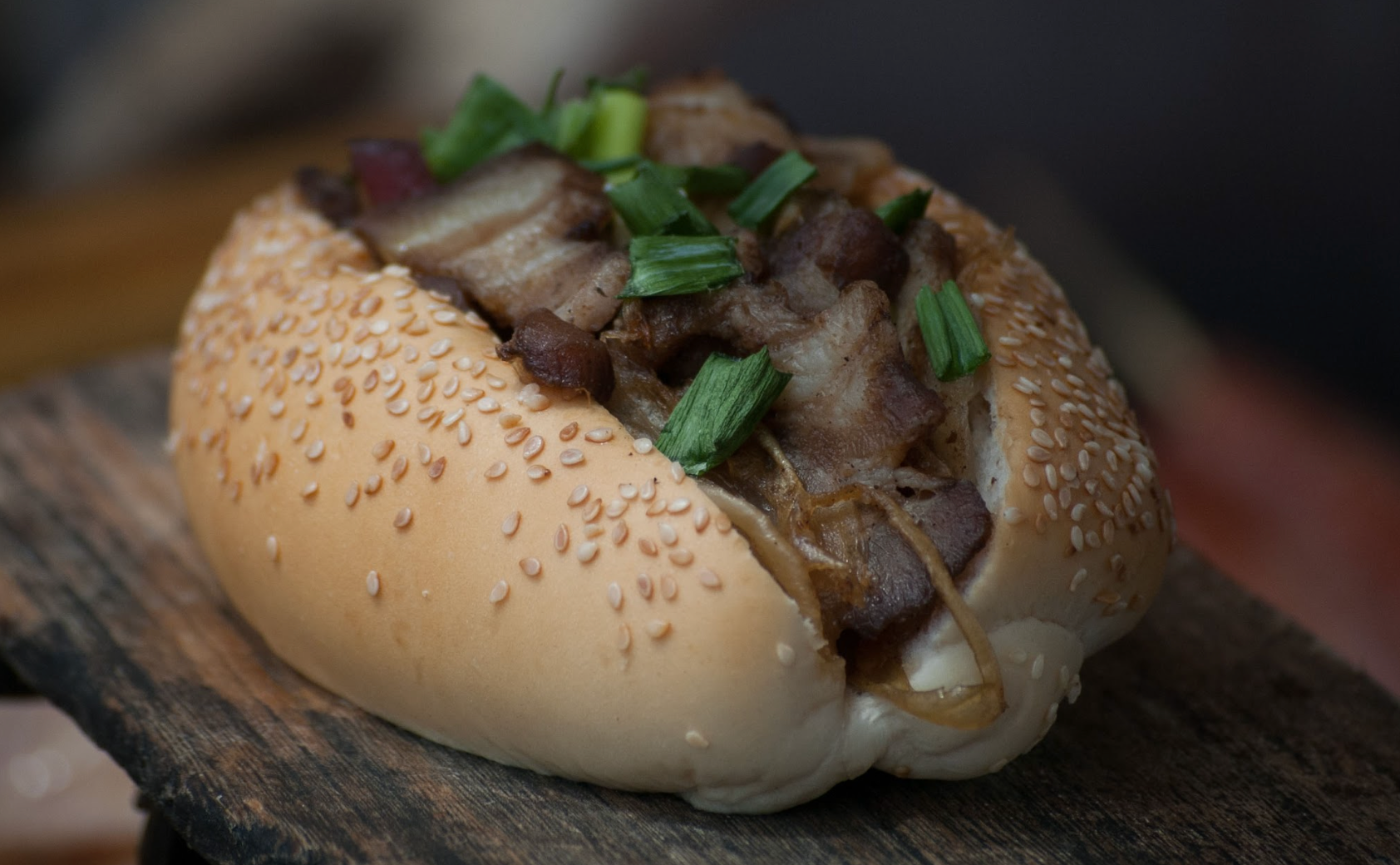
Wild boar is a traditional ingredient in local Indigenous cuisine. It’s usually charcoal-grilled or pan-seared, with leaner fat, firmer texture, and a bite that’s noticeably different from regular pork.
Alishan Bamboo Rice
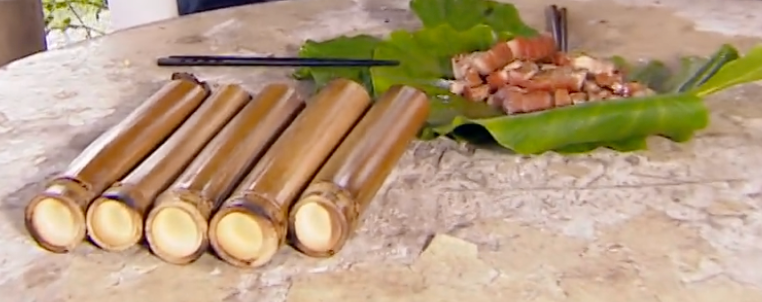
Sticky rice cooked inside bamboo tubes, lightly infused with a natural bamboo aroma. This is a traditional Tsou serving vessel and cooking method, and a must-order at tribal restaurants.
Alishan High-Mountain Coffee
Grown across five townships at elevations between 600 and 1,500 meters, Alishan coffee develops distinctive flavors thanks to the large temperature difference between day and night. We’ll explain more in detail later.
Fenqihu Lunchbox
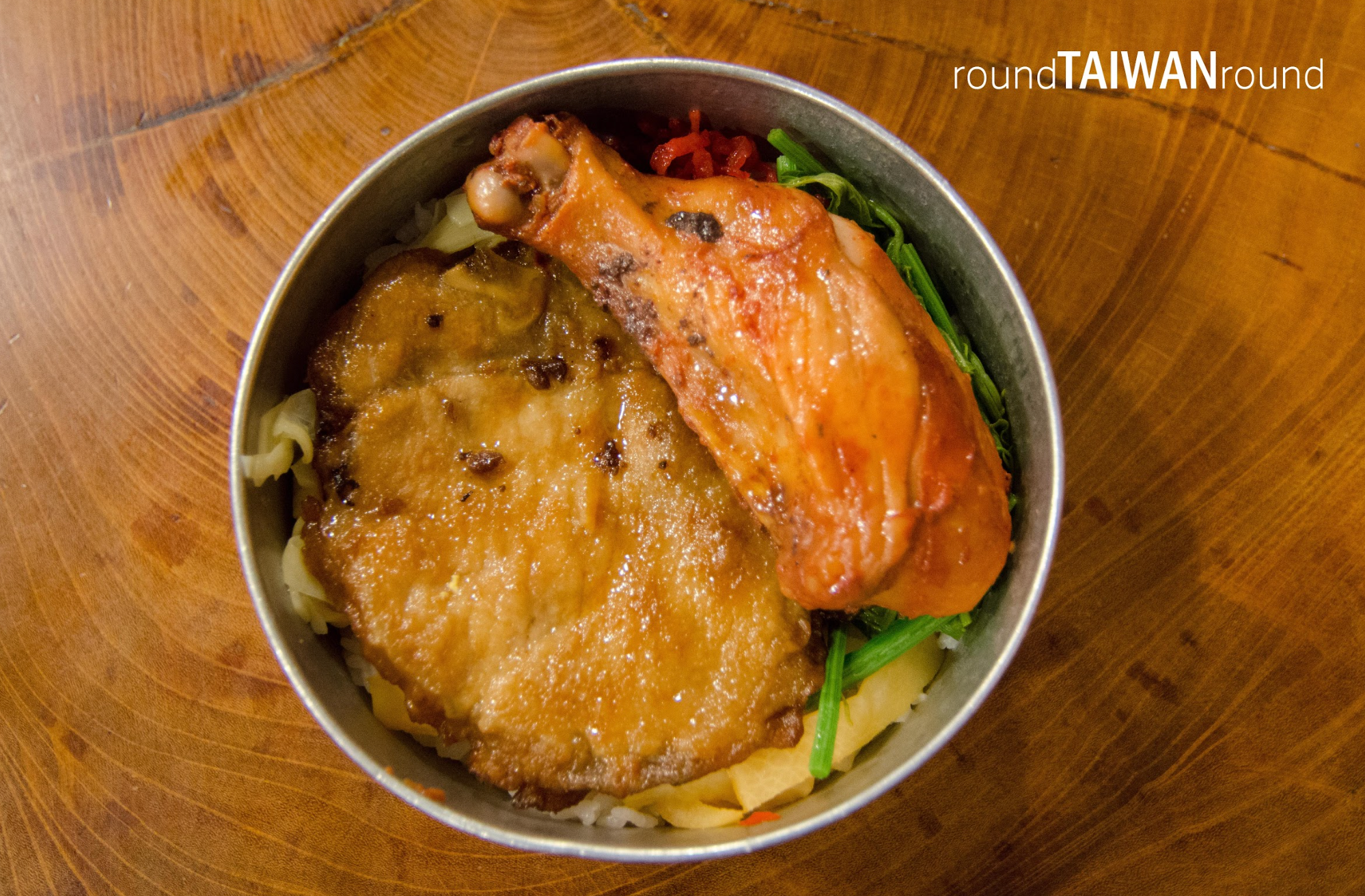
Image licensed by: roundTAIWANround
A nostalgic railway lunchbox served in a bamboo container with pork chop rice. You’re eating it as much for the atmosphere and sense of history as for the meal itself. It’s well worth a stop before heading back down the mountain.
Aiyu Jelly
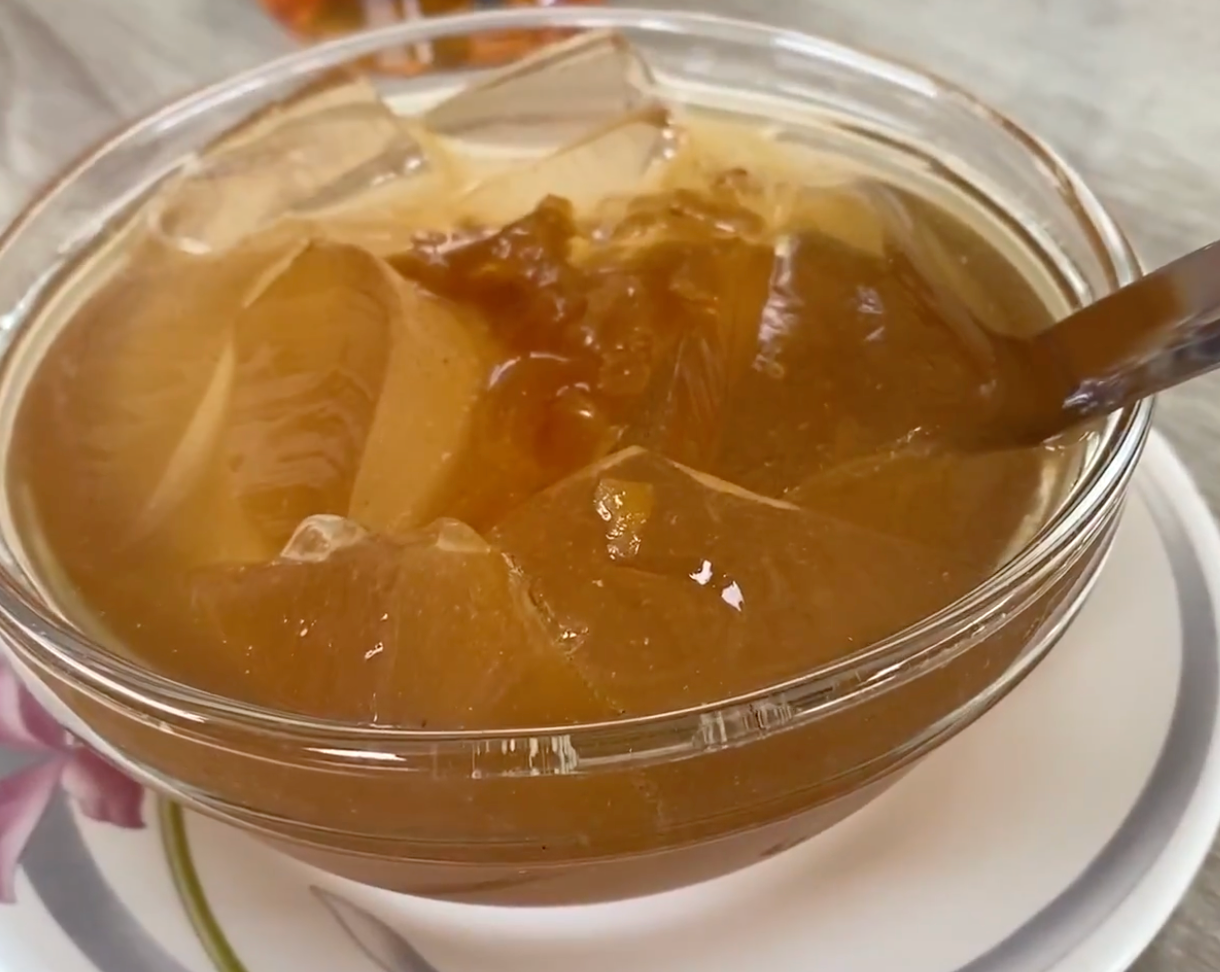
Alishan is one of Taiwan’s major regions that produses aiyu . Freshly made aiyu with honey or lemon is the go-to dessert in the area, especially refreshing in summer.
These five are the essentials on your must-eat Alishan food checklist. Everything else is a bonus.
Where Can You Eat Tsou Cuisine in Alishan? How Should You Order Wild Boar, Bamboo Rice, and Millet Wine?
The heart of Tsou cuisine is cooking with the mountain as your pantry. Tribal restaurants are mainly located in Danayigu, Laiji, and Lijia, and all of them require advance reservations. If you just show up, there’s a good chance there won’t be any seats.
Tsou cuisine is the soul of any Alishan food guide, but behind those two words are a lot of details most people don’t know: where the tribal restaurants are, whether reservations are necessary, and whether millet wine can be ordered on its own. Alishan millet wine is traditionally brewed by the Tsou, with relatively low alcohol content, a gentle sweetness, and a rice aroma. It’s practically a must-try part of the tribal dining experience.
Yupasu Tsou Restaurant
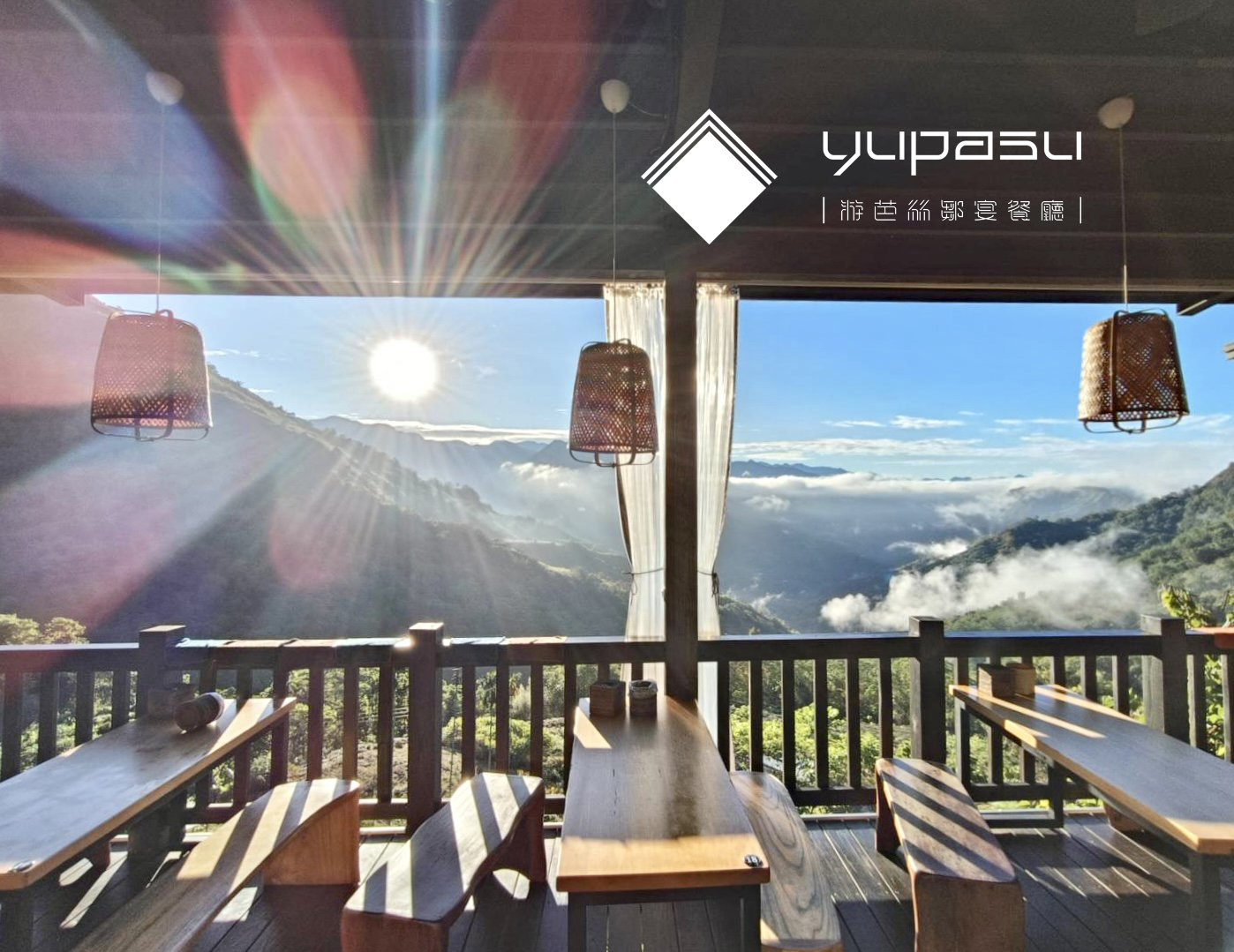
Image source: Yupasu Tsou Restaurant FB
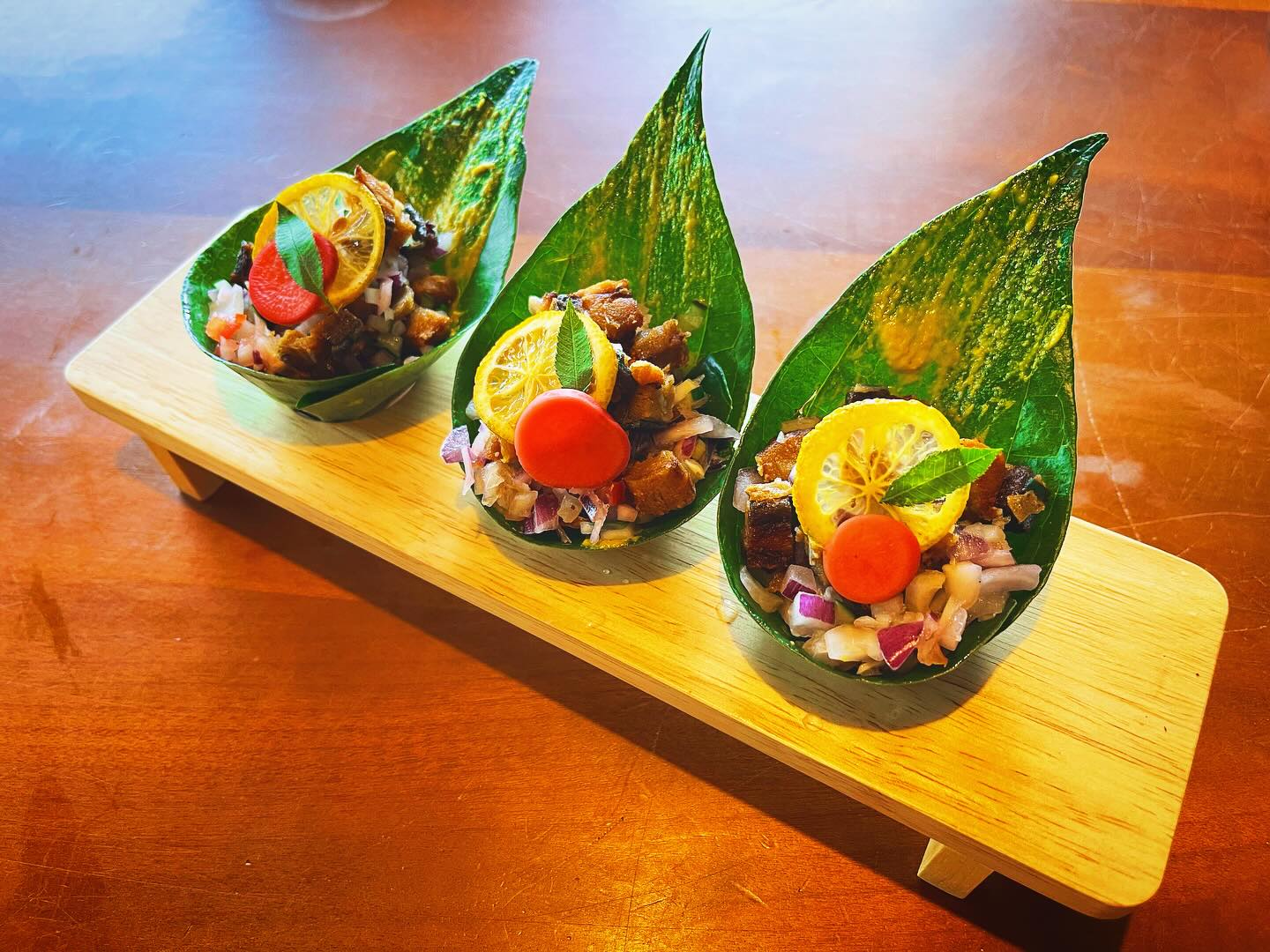
Image source: Yupasu Tsou Restaurant FB
One of the most reviewed Tsou tribal restaurants in Shanmei Village is Yupasu Tsou Restaurant, with a 4.4 Google rating and more than 3,000 reviews. The setting is beautiful: the restaurant is built along the mountainside, and while dining you can hear the wind through the hills and the nearby stream. It has more atmosphere than many scenic restaurants in the city. Being able to enjoy both the food and the view at the same time is a rare experience, and the interior clearly shows real care and attention from the owners. The overall dining ambience is excellent, and with its own dedicated parking lot, it’s no surprise this is a top pick for many people looking for the best restaurants in Alishan.
As for the food, Yupasu leans toward creative dining, but many of the five must-try Alishan dishes we mentioned earlier are all here, including freshly grilled wild boar, lemon aiyu jelly, and bamboo rice. Another popular recommendation is the “wood-smoked bamboo chicken.” If you’re not into meat, their mountain vegetable dishes are also very well done, including stir-fried high-mountain mushrooms, maqaw mapo tofu, and stir-fried local greens. You can order à la carte or go for a set meal.
📌 One thing to note: there is a minimum spend of NT$500 per person, and the restaurant currently accepts cash only, no credit cards. If you’re bringing a pet, it needs to stay in a carrier or pet stroller.
All in all, Yupasu Tsou Restaurant is one of the best entry-level choices if you’re trying Tsou cuisine in Alishan for the first time.
- Hours: 11:00–15:00, 17:00–19:30; closed Tuesdays and Wednesdays. (If you want scenic seating, it is highly recommended to book in advance.)
- Address: No. 1-8, Shanmei, Alishan Township, Chiayi County (Google Map)
YUYUPAS Mafei Restaurant
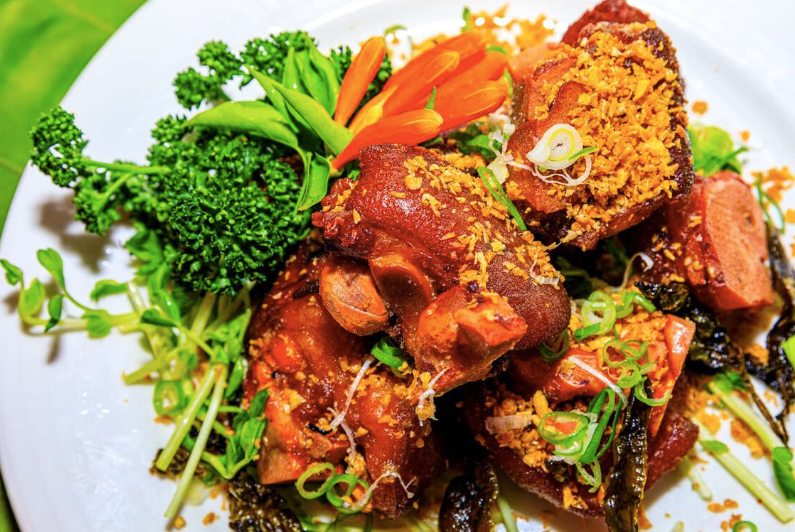
Image source: Alishan National Scenic Area Administration
Mafei Restaurant is located inside the YUYUPAS Cultural Park, which sits at an elevation of 1,300 meters and includes both tea and coffee plantations. The menu features Tsou cuisine carefully created by a team led by a five-star hotel chef, using seasonal Alishan ingredients.
Must-order dishes include the “log-grilled wild boar” and the “Alishan camellia oil chicken,” made with free-range Alishan chicken, ginger, and house-made camellia oil from the local tribe. You’ll regret skipping it. There are also set menus priced at NT$399 and NT$699 per person.
The 3-hectare park itself is full of Tsou tribal character, and its thoughtful barrier-free design makes it very accessible for elderly visitors and those with strollers. Although there is an admission fee, part of it can be used as an on-site credit. Even if you don’t eat here, you can still visit the tea plantation, enjoy coffee, taste millet wine and jerky, and browse Indigenous woven crafts. In winter, cherry blossoms bloom here too, and occasional Tsou performances make the overall experience much richer than simply booking a table for lunch. It’s especially suitable for travelers who are new to Tsou culture and want to learn a bit more.
- Hours: 09:30–16:30
- Admission: Full ticket around NT$300 (includes NT$100 redeemable voucher)
- Address: No. 127-2, Neighborhood 4, Leye Village, Alishan Township, Chiayi County (Google Map)
- Phone: 05-256-2788
Danayigu Mountain Beauty Restaurant(達娜伊谷山之美餐廳)
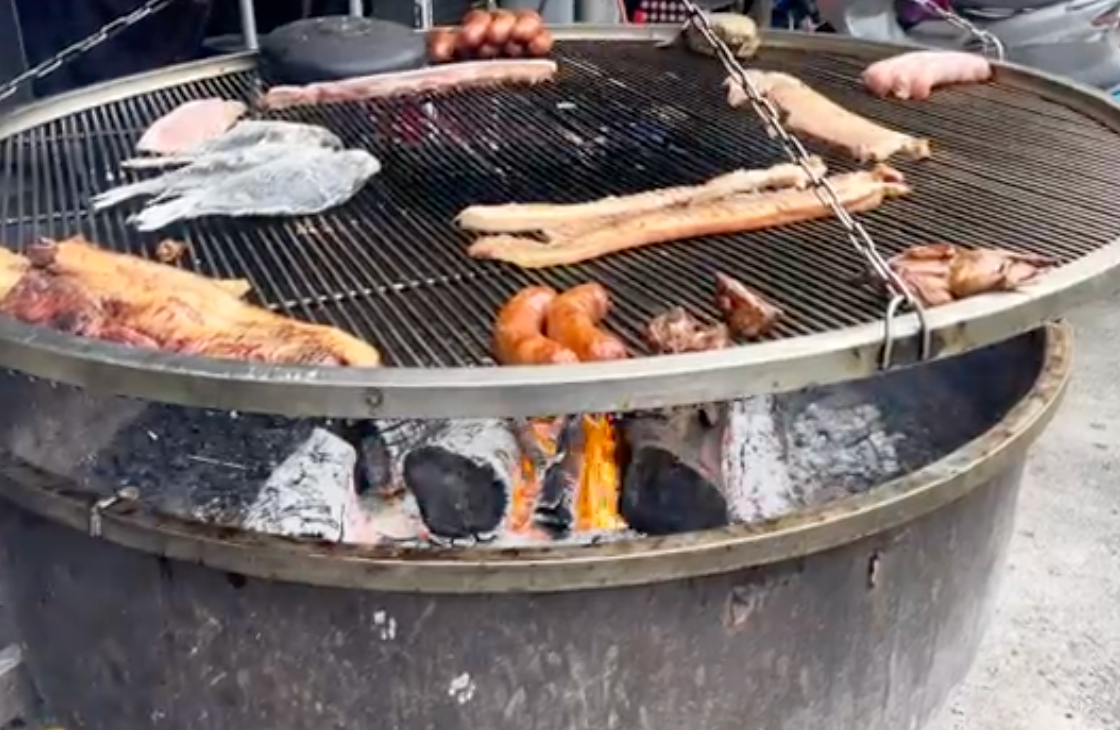
Located right by the entrance to Fumei Suspension Bridge, Danayigu Mountain Beauty Restaurant is a bit out of the way, but parking is easy and the restaurant specializes in traditional Tsou ingredients.
Their signature grilled wild boar is generously portioned, springy and juicy, and served with onions and cabbage. It’s savory, satisfying, and hard not to go back for seconds. The other dishes are just as solid: chayote leaves, loofah, and bamboo shoots are all freshly harvested in season and simply stir-fried to bring out their sweetness and crisp texture. The salt-grilled Taiwan tilapia has crispy skin and delicate meat, while the roasted local chicken is cooked just right, with the aroma drifting all the way from the kitchen to the door.
As you eat, there’s a stream right outside the window, and the sound of the flowing water adds more flavor to the meal than any seasoning could. You can order à la carte or set meals, and the restaurant also offers lodging and local products suitable as souvenirs.
- Hours: 11:00–15:00, 17:00–18:30
- Address: No. 106, Shanmei Village, Alishan Township, Chiayi County
- Phone: 05-258-6655
Hana Kitchen
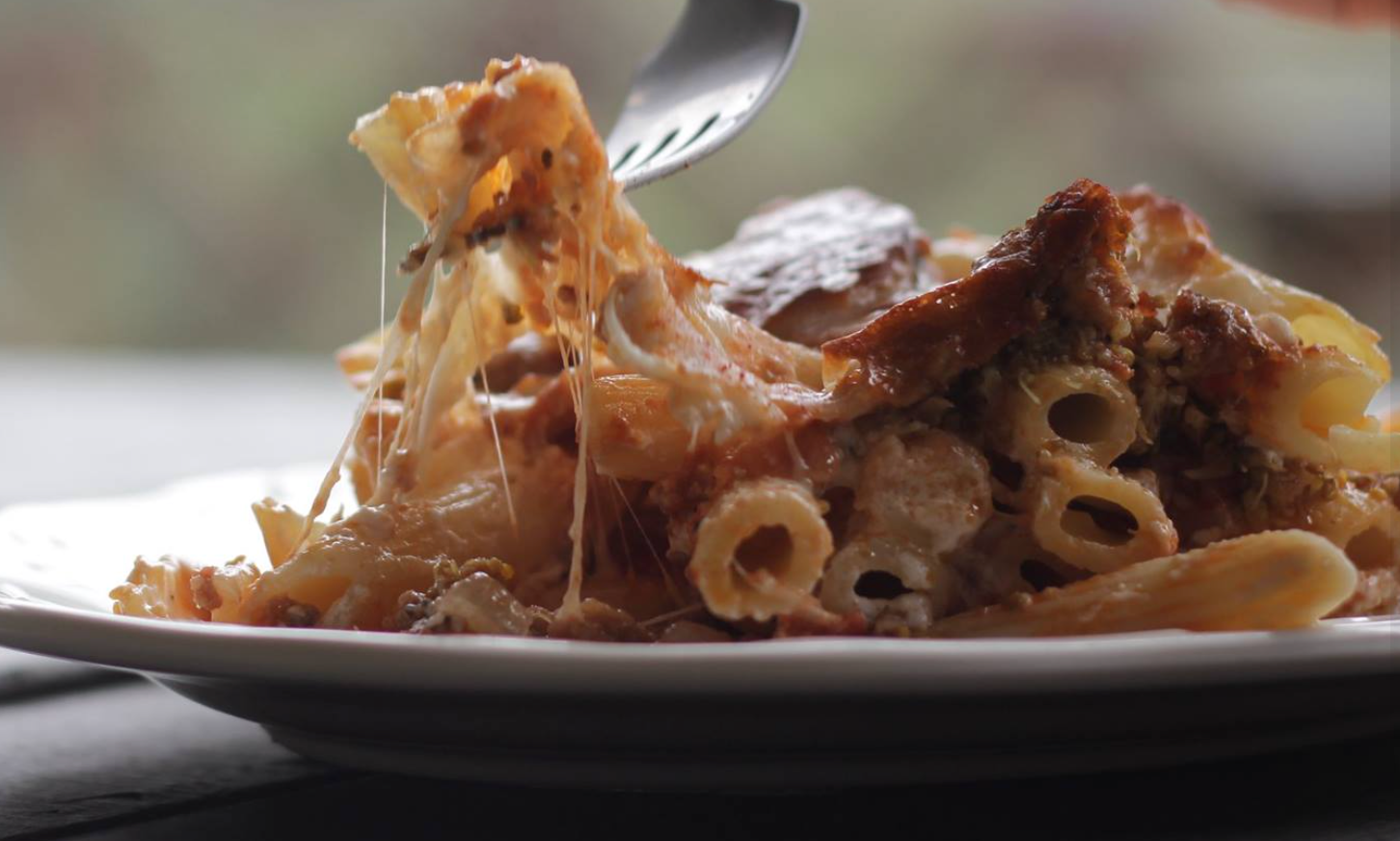
About 20 kilometers of winding mountain road from Fenqihu Old Street will bring you to Hana Kitchen, a well-known restaurant in Laiji Village surrounded by mountains, with a terrace and hassle-free parking.
Hana Kitchen combines South African flavors with traditional Tsou ingredients. Whether it’s BBQ sausage, grilled wild boar, pickled vegetables with a bowl of pumpkin soup, or even a pizza, the food is genuinely delicious. The quality is surprisingly high for a mountain restaurant. There’s also a walking trail nearby if you’d like a short stroll after your meal. Still, it’s best to make a reservation before heading out, so you don’t make the trip only to find there are no seats available.
- Hours: 11:00–17:00 (closed Mondays and Tuesdays)
- Address: No. 87-3, Neighborhood 4, Alishan Township, Chiayi County
- Phone: 0975-117-154
After seeing so many places to try authentic Tsou cuisine, you’re probably now thinking: these tribal villages are so remote, how do you even get there? And that really is the first obstacle for most travelers. Danayigu and Laiji are not on the main route to the Alishan National Forest Recreation Area, buses are infrequent, and Uber is unreliable in the mountains. If you’re traveling in a group of three to five people or more, a private charter is the most straightforward solution. It can take you directly to the tribal restaurant entrance and then on to your next stop, without the headache of mountain-road logistics.
Check the charter price
tripool serviceWhich Restaurants Inside the Alishan Park Area Are Worth Recommending?
There aren’t many restaurants inside the Alishan National Forest Recreation Area. Among them, Shan Bin Restaurant is the oldest, established in 1983. The other scenic restaurants mostly sell the experience of dining with views of sea of clouds and forests, and tend to have higher average prices, around NT$300-800 per person.
Once you enter the park, you’ll probably notice there are fewer dining options than outside. But for visitors, that actually makes things simpler: there are only a handful of places, so you just need to know which one suits you best.
Personally, we’d recommend Shan Bin Restaurant. It’s a 40-year-old local favorite. The menu may not be flashy, but the ingredients are fresh, the portions are generous, and the dining environment is among the better ones around Alishan hotel.
Shan Bin Restaurant (The Oldest Restaurant in the Alishan Park Area)
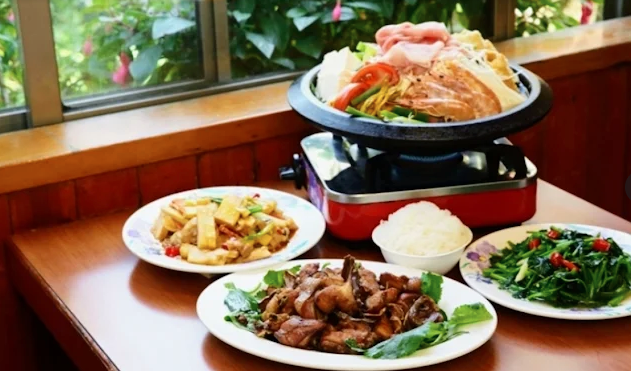
Image source: Shan Bin Restaurant Google Business profile
Founded in 1983, Shan Bin is the oldest restaurant inside the Alishan National Forest Recreation Area, with more than 40 years of history. It’s also one of the few restaurants in the park that stays open relatively late. The menu focuses on affordable Taiwanese mountain-style set meals and home-style stir-fries, featuring local Alishan vegetables, mountain ingredients, and hot pots. Most ingredients come from farms around the park. For example, cabbage grown in Alishan’s cool mountain climate is especially sweet and crisp, genuinely different from what you’d get in the city. If you like sweet-savory flavors, their braised pork belly with preserved veggies is worth ordering; that one dish alone can carry several bowls of rice. The mountain celery omelet also has a distinctive texture. Meat lovers should try the bamboo chicken, and if you enjoy hot pot like I do, you can also warm up with a hearty pot here, with refillable broth. They also offer some vegetarian options, which is a very thoughtful touch.
The mountain cuisine here is fresh and made to order, with a comforting, home-cooked feel. Prices are reasonable, portions are generous, and the atmosphere is pleasant. For a mountain-area restaurant, it's a good value for your money. The only catch is that they do not accept credit cards, so remember to bring cash.
- Hours: 10:30–20:30
- Address: No. 19, Alishan Township, Chiayi County (inside Alishan National Forest Recreation Area)
- Phone: 05-267-9633
Shanzhixiang Restaurant(山芝鄉風味館)
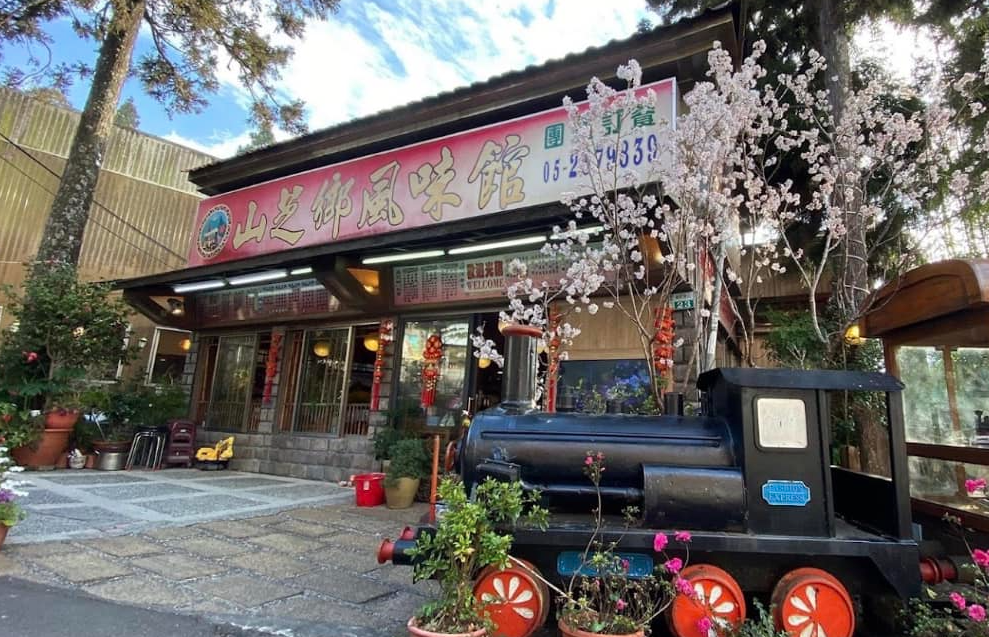
Image source: Shanzhixiang Restaurant FB
Located directly across from the Alishan Post Office, Shanzhixiang Restaurant offers a comfortable dining space and dishes that are genuinely very good. Highlights include crispy fried river shrimp, crunchy stir-fried water snowflake greens, our favorite stir-fried wild boar, camellia oil chicken, and beef with green peppers. Every one of them is a rice killer. When the Alishan weather turns chilly, you can also order a piping-hot assorted hot pot, and pair it with ashitaba egg. Portions are generous, and the prices are quite reasonable for family-style dining, making it a great place to enjoy a filling meal.
- Hours: 10:00–20:30
- Address: No. 23, Zhongzheng Village, Alishan Township, Chiayi County (inside Alishan National Forest Recreation Area)
- Phone: 05-267-9839
Which Shizhuo Food Spots Are Worth Trying? Is It Really Worth the Detour?
Shizhuo is home to a well-known cluster of tea garden trails: the Mist Trail, Tea Trail, Cloud Trail, Sunset Glow Trail, and Cherry Blossom Trail, and is also famous for its glazed-light night views. It sits around kilometer 63.5–64 on the Alishan Highway, about 25 kilometers from the forest recreation area, or roughly a 40-50 minute drive. It’s the most concentrated dining area around Alishan, with cafés, light-meal restaurants, and guesthouse restaurants all gathered here.
If you’re wondering whether Shizhuo is worth the detour, the answer is simple: yes, but only if you know why you’re going and how you’re getting there.
Shizhuo offers much more variety than the restaurants inside the park, and it has a slower, more laid-back mountainous town atmosphere. It’s ideal for travelers who aren’t rushing and want to slow down with a cup of coffee. Shizhuo is one of the popular stops on the way to Alishan, but if your goal is a quick day trip to check off the top five Alishan attractions and head back down, you can skip it. On the other hand, if you’re planning to stay overnight in the mountains, you’ll likely be very glad you gave yourself an extra day because the breakfast and lunch options here are much better.
Yongfu Camellia Oil Chicken(永富苦茶油雞)
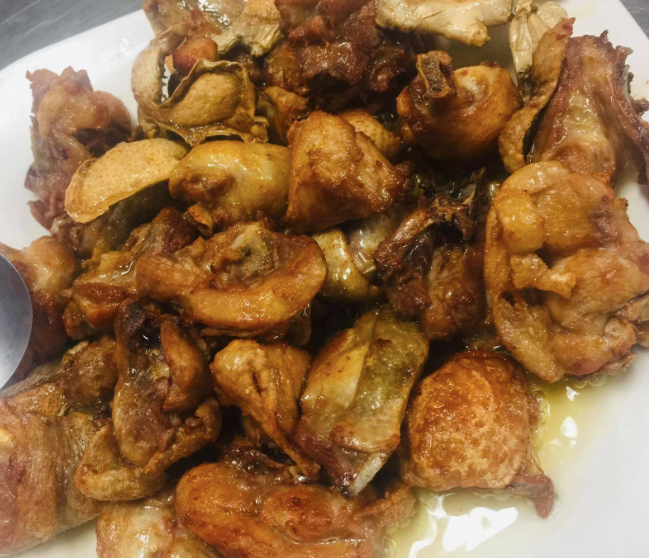
A popular local eatery in Leye Village, this restaurant specializes in camellia oil dishes. It uses locally produced camellia oil and ginger slices, frying them until fragrant and crisp before stir-frying the chicken. It’s a distinctive regional dish and not something you come across often, even in the Alishan area.
The shop itself is small, but it has more than 2,700 Google reviews. It attracts not just tourists, but plenty of locals too, making it a great choice for travelers who want hearty mountain-town home cooking that doesn’t feel generic. They also serve camellia oil vermicelli, and highly recommended dishes include wasabi tofu, wasabi chicken soup, and crisp, sweet high-mountain cabbage.
Because business is so good, reservations are currently not accepted. If you want to eat here, be sure to arrive early.
- Hours: 11:00–14:30, 16:00–18:30; closed Tuesdays and Fridays
- Address: No. 114-2, Leye, Alishan Township, Chiayi County (Google Map)
- Phone: 05-256-1488
Zuoyi Teahouse(佐一茶屋)
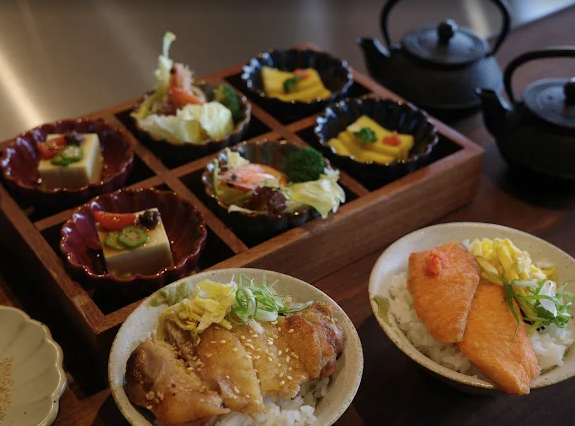
A tea-experience restaurant in Leye Village, Shizhuo, Zuoyi Teahouse offers great views and a warm Japanese wood-style interior that feels atmospheric and refined. The food and drinks revolve around Alishan high-mountain tea, using locally grown Alishan oolong supplied directly by tea farmers, paired with light meals. It’s probably the most ritually filled afternoon tea option in the area, and the ingredients are fresh. If you’re more of a tea drinker than a coffee person, this may suit you better than the cafés in Shizhuo.
For breakfast, there are soft French bread platters and ochazuke tea rice. Dinner focuses mainly on hot pots, with fried items and skewers available. It’s a great option for family trips to Alishan.
- Hours: 08:30–20:00
- Address: No. 2-9, Neighborhood 1, Leye Village, Alishan Township, Chiayi County
- Phone: 0975-913-068
AjangHome 23 coffee(阿將的家23咖啡館)
Located in the Shizhuo area, the highly rated “Ajiang’s Home Café 23” is one of the most frequently photographed cafés for first-time visitors to Shizhuo. It serves Alishan coffee beans sourced directly from its own farm, along with handmade desserts and a scenic terrace. The owner, Ajiang, is also the farm owner himself, so if you ask about the coffee you’re drinking, he can tell you exactly which plot of land the beans came from.
Must-order items
Single-origin hand-brewed Alishan coffee (seasonal beans delivered directly from the farm), baked scones with homemade jam, and traditional sponge cake. The acidity of the coffee is kept at a very approachable level, so even travelers who don’t usually enjoy acidic coffee will likely find it easy to drink.
- Hours: 09:30–16:30 (closed Tuesdays and Saturdays)
- Address: No. 129-6, Neighborhood 4, Alishan Township, Chiayi County
- Phone: 0933-328-086
Is the Fenqihu Lunchbox Really a Must-Try, or Is It Just Photogenic?
Image licensed by: roundTAIWANround
Among all the food around Alishan, the Fenqihu lunchbox is probably the most historically iconic. A bamboo lunchbox filled with pork chop rice carries with the legacy of Taiwan’s railway culture during the Japanese colonial era. At around NT$100-150, it’s also one of the most budget-friendly meals on many travelers’ itineraries.
Any time you see someone’s Fenqihu travel diary, beautifully photographed shots of the Fenqihu lunchbox always seem to appear again and again. But does it actually taste good? To be honest, it’s not Michelin-level cuisine. But sitting in Fenqihu, opening that box of pork chop rice, and eating it in the cool mountain breeze can be more memorable than a meal at a fancy restaurant.
So, is it a must-try? We’d say yes, absolutely worth trying, but don’t set your expectations too high.
Fenqihu Hotel (The Original Fenqihu Lunchbox Shop)
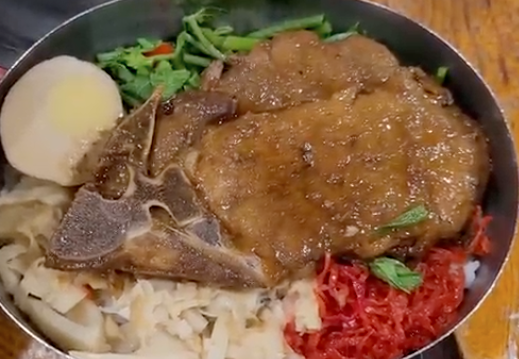
The most iconic old-school lunchbox shop in Fenqihu is Fenqihu Hotel, located directly across from Fenqihu Station. It’s also the place most credited with making the “Fenqihu lunchbox” famous.
Buying a lunchbox here isn’t just about getting a meal, it feels like taking part in Taiwan’s mountain railway culture. The shop is right by the entrance to Fenqihu Old Street, so it’s easy to find. During holiday periods, the line can get very long, but service moves fairly quickly.
The must-order pork chop lunchbox and chicken drumstick lunchbox may come with simple side dishes, but somehow they still taste special. After your meal, we also recommend grabbing a bowl of aiyu on the old street for dessert.
- Hours: 09:30–19:00, until sold out (on weekends and holidays, they usually sell out around 2:00–3:00 p.m., so it’s best to arrive before noon or you may miss out.)
- Address: No. 178-1, Zhuqi Township, Chiayi County
- Phone: 05-256-1888
Aiyu Bo’s House(愛玉伯ㄟ厝)
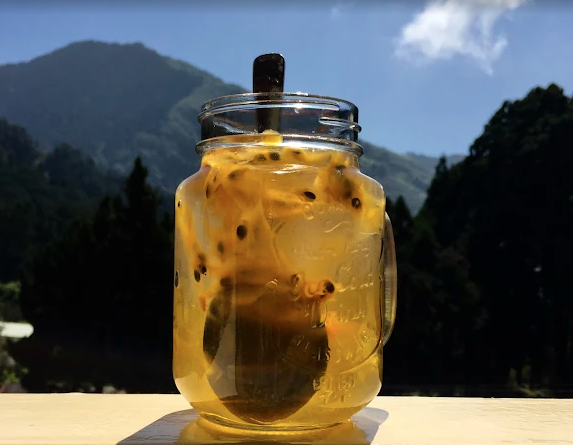
Image source: Aiyu Bo’s House Google Business profile
“Aiyu Bo’s House” is a local favorite in Fenqihu that specializes in aiyu jelly. It uses homegrown Alishan aiyu seeds and makes everything fresh to order. The flavor and texture are completely different from the packaged aiyu you’d find in supermarkets. The jelly here has a natural, delicate set with a pleasant bite, and the flavor options are surprisingly distinctive, including coffee aiyu and plum aiyu, both of which are hard to find elsewhere. Add a little honey or lemon juice and the taste changes again. So if you visit Fenqihu in summer, this is absolutely worth trying. One thing to note is that they don’t offer takeaway, which actually makes it a perfect place to sit down, cool off, and rest for a while after walking around the town.
- Hours: 10:00–17:00
- Address: No. 151, Zhuqi Township, Chiayi County
- Phone: 05-256-1330
How Should You Plan Breakfast, Lunch, and Dinner in Alishan?
A lot of people only realize once they get to Alishan that they have no idea where to eat dinner. That’s because most restaurants in Alishan operate on daytime hours, generally opening from around 9 a.m. and closing by 4 or 5 p.m. By the time it gets to 6 or 7 p.m., your options shrink dramatically. This is something you really need to think about when planning your itinerary.
Breakfast (7:00-9:00)
If you’re going to catch the sunrise, you’ll probably set off around 4 or 5 a.m., and by the time you return it’ll be breakfast time. Guesthouses in Shizhuo and near the park often provide breakfast options. If you’re traveling independently, look for simple noodle shops or steamed bun stalls that open early. At that hour, the priority is just to warm up and get something into your stomach, because Alishan mornings can be cold, and hot soup or warm soy milk is much better suited to the climate than cold food.
Lunch (11:30-13:30)
This is the most important meal of the day and the one with the most choices. For lunch in Alishan, you can pick between restaurants inside the park, the Shizhuo dining area, or Tsou tribal cuisine (which requires advance reservations). We recommend making your top-priority meal happen at lunch rather than leaving it until dinner and regretting it later.
Dinner (17:00-19:30)
Dinner options in Alishan are much more limited. There are still some restaurants open in areas like Shizhuo and Tefuye outside the park, but they’re a bit of a drive from central Alishan, and on busy weekends you may still have to wait. If you’re staying at a guesthouse, it’s worth asking whether they offer dinner, because it’s often much more convenient than going out to look for food.
| Meal | Suggested Budget | Notes |
|---|---|---|
| Breakfast | NT$100-200/person | Keep it simple and warm |
| Lunch | NT$300-600/person | Main meal of the day; scenic restaurant or Tsou cuisine |
| Dinner | NT$200-500/person | Fewer options; mostly Shizhuo or guesthouse dining |
| Total | NT$600-1,300/person | Drinks and desserts not included |
For four people, total food costs in one day come to roughly NT$2,400-4,200, or NT$600-1,300 per person. That’s about the same as eating at mid-range restaurants in Taipei for a day, but here you’re dining in the forests of Alishan, beside tribal villages, and near sea of clouds.
If you want to save time moving between meals and make your itinerary smoother, a tripool charter can arrange your route around your breakfast, lunch, and dinner plans. It’s not a fixed route, it’s customized based on your needs.
Where Can Vegetarians Eat in Alishan? Are There Many Options?
Vegetarian options in Alishan are limited, but Shan Bin Restaurant inside the park and some guesthouse restaurants in Shizhuo can provide vegetarian dishes. It’s best to confirm in advance and let the restaurant know before you arrive.
Vegetarian options inside the park
Shan Bin Restaurant is one of the more flexible choices. The menu includes vegetarian-friendly items such as stir-fried mountain greens, stir-fried cabbage, stir-fried bamboo shoots, and tofu soup. However, the kitchen is not fully vegetarian, so if you have strict dietary requirements, it’s best to call ahead and confirm whether they can separate meat and vegetarian preparation. For simpler food, Xinxiang Local Eatery(馨香小吃店) next to the temple area near Shouzhen Temple by Xianglin Station also sells vegetarian items.
Vegetarian options in Shizhuo
Some cafés offer vegetarian light meals, usually in the form of salads, savory vegetable quiches, or handmade bread sets, though full set-meal choices are limited.
📌 Vegetarian tips for eating in Alishan:
1. For strict vegans (no eggs or dairy at all), options in Alishan are even more limited, so it’s a good idea to bring some backup food with you.
2. Tsou tribal cuisine is almost entirely meat-based. Vegetarian travelers can ask whether substitutes are available, but it’s best not to expect too much.
3. Some Fenqihu lunchbox shops may offer vegetarian versions, but you’ll need to ask in advance or check directly with the old street vendors.
How Should You Choose Alishan High-Mountain Coffee?
Alishan coffee is grown across five townships: Alishan, Zhongpu, Zhuqi, Meishan, and Fanlu, at elevations between 600 and 1,500 meters. Estate-grown beans certified by the Chiayi County Government and local associations are known for their lower acidity and stronger sweetness, making this one of Taiwan’s most important specialty coffee regions.
Many people have tried Alishan coffee without really understanding why it tastes different from coffee grown in lower areas. The answer lies in the geography.
The five townships of Alishan, Zhuqi, Meishan, Fanlu, and Zhongpu make up the certified production area for Alishan high-mountain coffee. At elevations ranging from 600 to 1,500 meters, the large temperature swings between day and night slow down the growth of the beans and allow more sugars to develop. That’s why Alishan coffee generally has lower acidity, sweetness and fruity aromas.
How to choose: three ways to identify good coffee
- Certification mark: Choose products certified by the Chiayi County Government or CHIAYUM, which indicates that the beans do come from the certified Alishan production area.
- Ask about the estate: Good cafés in Shizhuo can usually tell you which township and farm the beans came from. If they can clearly explain the source, quality is usually more trustworthy.
- Taste on site: If the café offers samples, definitely try them. The quality difference between Alishan coffee beans can be huge. Even if they’re all called “high-mountain coffee,” the flavor can vary a lot from one estate to another.
| - | Alishan High-Mountain Coffee | Regular Lowland Coffee |
|---|---|---|
| Acidity | Low to medium-low | Medium to high (depending on the bean variety) |
| Sweetness | Noticeable, often fruity | Less pronounced |
| Finish | Longer | Shorter |
| Price | NT$150-250/cup | NT$80-150/cup |
👉🏻 Quick tip: look for the Chiayi County Government certification mark, or simply ask where the beans come from (for example, the estate name). Try to choose cafés that offer tastings when possible. Recommended spots: Mountain Ali Tea No.35 (spectacular tea plantation views) and Xianjing Café (self-grown, self-roasted beans with a fantastic view).
Below are two teahouses frequently recommended by travelers who think they’re worth going out of your way for if you want to enjoy Alishan coffee and high-mountain tea. Each has its own style and suits a different kind of traveler.
Mountain Ali Tea No.35(茶田35號)
A high-mountain tea dining space on the eastern tea-growing side of Alishan, Mountain Ali Tea No.35 overlooks terraced tea plantations. The tea here comes directly from the family’s own nearby tea fields, and the entire process from harvest to brewing is transparent. The space is styled like a traditional Taiwanese teahouse, with wooden tables and ceramic teaware. When you sit down for tea, a green expanse of tea-covered mountains opens up outside the window. It’s more striking and more real than any scenic photo can capture.
For first-timers, we recommend trying the “Alishan Yingxiang Oolong,” known for its elegant high-mountain tea aroma, or the “Alishan Black Tea,” which is smooth, rich, and pleasantly lingering. Mountain Ali Tea No.35 also has a branch in Ogasawara.
- Hours: 11:00–21:00
- Address: No. 34, Zhongzheng Village, Alishan Township, Chiayi County
- Phone: 05-267-9764
Xianjing Café(仙井咖啡館)
Source: Xianjing Café Google Business profile
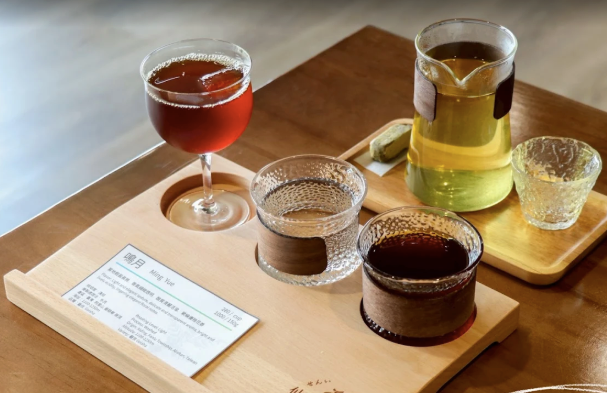
A hidden-gem café in Fanlu Township, Xianjing Café is located near the Eryanping Trail and beside the Xiding Scenic Area. The interior is unexpectedly well designed, and the café offers beautiful views toward Alishan. The owner grows their own coffee and roasts the beans themselves, and this place truly serves hand-brewed coffee made entirely from scratch, with every step done in-house. Their high-mountain tea is just as carefully handled, and we’d recommend the Ganyun Coffee and Jin Xuan Tea. Paired with mille crepe cake or pizza, it makes a great afternoon break. It’s an ideal place to rest and enjoy some good food after hiking the Xiding Eryanping Trail. The only downside is that they only accept walk-ins and do not take reservations.
- Hours: 10:30–17:00 (closed Wednesdays)
- Address: No. 80, Fanlu Township, Chiayi County
- Phone: 0909-028-713
Can You Eat on the Alishan Forest Railway? What Are the Rules?
Yes, eating is generally allowed. That said, to help keep the environment clean, it’s best to avoid foods with strong odors or anything likely to spill or make a mess in the carriage. Light snacks such as sandwiches, bread, or crackers are the safest choices.
👉🏻 Tickets for the Alishan Forest Railway should be booked in advance, and they sell out fast during flower season and long holidays. For the full booking process, see: Alishan Forest Railway Ticket Booking Guide
How Much Are Alishan Attraction Tickets? What Should You Budget in Total After Entering the Park?
👉🏻 Key point: 2026 admission tickets for the Alishan National Forest Recreation Area are NT$300 for foreign visitors, NT$200 for ROC nationals, NT$150 for half-price tickets, and NT$10 for concession tickets. Be sure to calculate admission separately from your food budget.
Before planning your budget, don’t forget to include admission. It’s a cost many travelers overlook.
| Ticket Type | Price | Eligible Visitors |
|---|---|---|
| Full Fare (Foreign Visitors) | NT$300 | Adults without ROC nationality |
| Full Fare (ROC Nationals) | NT$200 | Adults with ROC nationality |
| Half Fare | NT$150 | Children aged 7-13 |
| Concession Ticket | NT$10 | Children aged 3-6, seniors aged 65+ |
For a family of four (two adults and two children aged 7-13), admission would be NT$200 × 2 plus NT$150 × 2 = NT$700. This should come out of your budget first, and whatever remains is your food budget for Alishan.
| Item | Estimated Cost |
|---|---|
| Admission Ticket (ROC nationals) |
NT$200 |
| Breakfast | NT$100-200 |
| Lunch (scenic restaurant or Tsou cuisine) |
NT$350-600 |
| Afternoon tea (high-mountain coffee) |
NT$150-250 |
| Dinner | NT$200-400 |
| Desserts / Souvenirs | NT$100-300 |
| Total per person | NT$1,100-1,950 |
For a one-day trip with four people (including admission, three meals, coffee, and dessert), the average cost comes to roughly NT$1,100-1,950 per person. That’s about what you’d spend on a nicer meal in Taipei, but here you also get some of Taiwan’s most iconic mountain scenery and Indigenous culture.
That said, if you’re driving up from Taipei or Chiayi, you’ll also need to factor in fuel and parking fees, and parking in Alishan on holidays can be a real hassle. The more people you have, the more likely it is that the cost of a private car, split among the group, will actually be cheaper than driving yourself. If you want to check the cost for your specific route, you can do that here 👇🏻
Once you add up the numbers, you may realize that a trip to Alishan isn’t actually as expensive as you imagined. What costs you more is not knowing how to plan, wasting time going the wrong way, standing in the wrong line, or waiting at the wrong restaurant. If you know where to eat, when to go, and which places need reservations ahead of time, Alishan can easily become the kind of place that makes you want to come back for more.
How Should You Plan an Alishan Food Map? One-Day vs. Two-Day Itineraries
The alishan food map is best planned around a triangle connecting the forest recreation area, Shizhuo, and Fenqihu. These places are far enough apart that you’ll need to drive between them. For a one-day trip, focus on the park and Shizhuo. If you have two days, you can also include Tsou tribal cuisine and Fenqihu.
Pulling all the earlier sections together, here are two suggested Alishan food itinerary options.
One-day itinerary (departing from Chiayi)
| Time | Itinerary | Notes |
|---|---|---|
| 07:00 | Depart from Chiayi (by private Alishan car charter or self-drive) |
A charter is recommended to avoid parking issues |
| 09:00 | Arrive in Alishan and enter the park | Admission NT$200/person (ROC nationals) |
| 09:30-11:30 | Forest trail walk and sacred tree area | |
| 12:00-13:30 | Lunch at Shan Bin Restaurant (top pick for lunch in Alishan) |
Go early on weekends to avoid waiting |
| 14:00-15:30 | Explore the Alishan park area and try high-mountain coffee | |
| 15:30-17:00 | Afternoon tea at a Shizhuo café | Hand-brewed coffee NT$150-250 |
| 17:30 | Head down the mountain and return to Chiayi |
Two-day itinerary (overnight stay in Shizhuo or inside the park)
| Time | Itinerary | Notes |
|---|---|---|
| Day 1 afternoon | Arrive in Shizhuo, visit cafés, check in guesthouse | Reserve a Tsou tribal restaurant for the next day |
| Day 2 early morning | Wake up for sunrise (by forest railway or trail) | Eating is prohibited inside some forest railway carriages |
| Day 2 morning | Breakfast, then enter the park | |
| Day 2 noon | Lunch at Shan Bin Restaurant | |
| Day 2 afternoon | Tsou tribal cuisine (Danayigu; reservation required) | NT$350-500 per person |
| Day 2 evening | Stop by Fenqihu for a lunchbox before heading down | Buy before noon; may sell out by afternoon |
📌 Quick reminders:
1. The three main food areas (the park, Shizhuo, and Fenqihu) all require driving between them and are difficult to connect on foot
2. Tsou tribal restaurants require advance reservations, which is the step most people forget
If you’re traveling in a small group of three to five people, a driver who knows the routes can help connect all three food areas without you having to figure out parking and road conditions on your own. For full Alishan trips departing from Chiayi that cover all three dining areas, tripool has matching route options with transparent pricing. You can check the fare first and decide later → no card binding, no login required, no hidden fees.
Alishan Food FAQ
Q1: How much more expensive are restaurants in Alishan compared with those in lower-altitude areas?
Restaurants inside the Alishan park area are generally about 20-40% more expensive than similar places in the lowlands, mainly because transporting ingredients up the mountain costs more, not because prices are being unfairly inflated.
Take lunch as an example: a mid-range restaurant in Taipei might cost around NT$250-350 per person, while a scenic restaurant in Alishan serving a comparable level of food will typically cost NT$350-500 per person. That extra NT$100-150 isn’t just paying for the meal, it’s also paying for the sea of clouds or forest view in front of you. Cafés in Shizhuo and Fenqihu lunchboxes are more affordable options, so you don’t necessarily need to spend a lot just to eat in Alishan.
Q2: Which Indigenous group are the “Maiden of Alishan” from?
The Indigenous people most associated with Alishan are the Tsou, a relatively small ethnic group. The famous lyric “Maidens of Alishan are as beautiful as water” is describing Tsou women, and traditional Tsou foods include the familiar staples of wild boar, bamboo rice, and millet wine.
The Tsou are one of Taiwan’s officially recognized Indigenous peoples, mainly living in Alishan Township in Chiayi County and Xinyi Township in Nantou County. In the Alishan area, examples of Tsou traditional culture include bamboo rice preparation, millet wine brewing, wild boar hunting culture, and their annual Mayasvi ceremony (also known as the War Festival). Tsou people are also known for being very warm and welcoming, and at many tribal restaurants the staff will actively share stories about Tsou culture, which becomes part of the dining experience itself.
Q3: How long does it take to walk around Alishan?
A full loop through the main trail system in the Alishan National Forest Recreation Area takes about 2.5-3.5 hours. If you also include the sacred tree area, Sisters Ponds, and Zhaoping Park, it’s best to set aside half a day (around 4-5 hours).
Once you add meal times into the plan, you’re realistically looking at half a day for sightseeing, plus another 1-1.5 hours for each meal. So to be honest, an Alishan day trip can feel very rushed, and a two-day trip is the better option.
Q4: What desserts are worth trying in Alishan?
When it comes to Alishan desserts, aiyu jelly is the standout. In Shizhuo, you can also find handmade taro balls and high-mountain tea eggs, while Fenqihu Old Street offers mochi and sweet soups, all light desserts made with local ingredients.
Aiyu is also one of Alishan’s signature agricultural products. Freshly made aiyu served with honey or lemon is springy, refreshing, and never too sweet, definitely something to try in summer. Fenqihu Old Street also has a few dessert stalls, including handmade mochi, which is great for snacking while you stroll. If you want to bring something home as an Alishan specialty food souvenir, high-mountain coffee beans and Alishan oolong tea are also excellent choices.
Q5: Which Alishan foods make the best souvenirs to bring home?
The most worthwhile edible souvenirs from Alishan are high-mountain coffee beans (ideally with CHIAYUM certification), Alishan oolong tea, dried aiyu seed pods, dried bamboo shoots, and dried high-mountain cabbage.
For coffee beans, choose versions with a clearly marked origin and certification label. For tea, Alishan oolong is one of Taiwan’s most iconic high-mountain teas. You can also buy aiyu seeds as an agricultural product and make your own aiyu jelly at home.
A Word from the tripool Editor: What Are the 2 Best Ways to Master Alishan Food with Less Stress?
When it comes down to it, eating well in Alishan is really about two things: knowing where to eat, and knowing when to go.
If you want authentic local Tsou cuisine, make reservations in advance, especially for scenic restaurants, where not booking often means you’ll have to show up early and hope for the best. And don’t miss Fenqihu lunchboxes or hinoki donuts either. If you know these details ahead of time, you’ll avoid at least half the usual travel mistakes.
If you’re planning to cover Alishan over two days and one night, you should definitely figure out how you’ll move between the three main food areas: the park, Shizhuo, and Fenqihu in advance. With more people, self-driving becomes a parking headache; with fewer people, public transport is limited and infrequent.
That’s why many travelers choose to hire a private car up the mountain. Whether you’re leaving from home or from Chiayi, it works well either way. Once the cost is split among four or five people, it’s often cheaper and far less stressful than driving yourself.
There’s also a shared ride option to Alishan for smaller groups. If you want to check the actual price from your departure point to Alishan, you can estimate it directly here. Try the fare calculator first, then decide.