
Accessible Charter Van Guide: The Best Choice for Seniors, Wheelchair Users, and Families with Limited Mobility

- Is an accessible charter van right for your trip?
- What is an accessible charter van?
- Accessible charter van, rehabilitation bus, or accessible taxi: what is the difference?
- How do you choose the right vehicle? Do not just count passengers
- How do you plan an accessible one-day trip with a charter van?
- Recommended accessible charter van routes | Three one-day itineraries in northern, central, and southern Taiwan
- How is accessible charter van pricing calculated? Prepare these 6 details before requesting a quote
- Why use tripool first to confirm accessible charter van needs?
- How do you book tripool’s accessible charter van? Just 4 easy steps!
- Accessible charter van FAQ
- Traveling with an accessible charter van can be this simple
When you travel with seniors, wheelchair users, or family members with limited mobility, the hardest part is usually not finding a vehicle. It is making sure the whole trip does not get stuck at every step.
The problem is rarely the destination itself. It is the parking lot that is too far away, the wheelchair that cannot get in, the wait for a restroom, or the long line at lunch. A trip that was supposed to feel relaxing can easily turn into a race against time.
That is why the real value of an accessible charter van is not the vehicle spec alone. What matters is whether everyone can stop worrying about the next step, and whether the itinerary can be adjusted in real time instead of being locked into a fixed tour schedule.
Of course, not every situation needs a charter van. For short medical visits or fixed transfers, a rehabilitation bus or an accessible taxi may be enough. But if you are planning a family trip, a one-day multi-stop itinerary, or a day that needs to stay gentle for seniors, then you are much closer to the ideal use case for an accessible charter van service.

Book Now
tripool private carIs an accessible charter van right for your trip?
|
Situation |
Recommendation |
|
A senior cannot walk far, but can get in and out of the vehicle independently |
Start by evaluating a regular charter van |
|
You have a foldable wheelchair, a walker, or multiple pieces of luggage |
Check the vehicle type and trunk space first |
| The wheelchair cannot be folded and must be used throughout the trip |
You must confirm an accessible vehicle in advance |
|
It is only a short trip, such as a hospital visit or follow-up appointment |
A rehabilitation bus or accessible taxi may be more suitable |
|
You want a one-day trip, multiple attractions, or a family outing |
A charter van trip is usually the better fit |
|
You are not sure whether the attractions will be too tiring |
Share the itinerary first and ask for an evaluation |
If your first thought after reading this is, “I do not just want a car, I want to take my family out properly,” then the next thing to focus on is not price. It is how to plan the itinerary so the day does not feel rushed.
Further Reading:
What is an accessible charter van?

An accessible charter van is closer to a transportation arrangement for completing an entire trip together, not just a simple point-to-point transfer.
That means it needs to consider more than just moving between attractions. It also needs to account for:
- Whether the vehicle can handle a wheelchair or mobility aid
- How much time is needed for boarding and getting off the vehicle
- Whether the time between stops is too tight
- Whether the restaurant is comfortable and easy to enter
- Whether the trip includes a proper break in the middle
In short, it is not just about where to go. It is about whether the whole day will feel physically exhausting.
Accessible charter van, rehabilitation bus, or accessible taxi: what is the difference?
If you are still undecided, ask yourself one question first: is this trip simply about “going somewhere,” or do you need to “complete an entire day of travel”?
If it is the first case, a rehabilitation bus or accessible taxi may be enough. If it is the second, a charter van becomes more valuable because it handles not only transportation, but also stops, waiting time, rest breaks, and route coordination throughout the day.
That said, rehabilitation buses, accessible taxis, and charter van services do not always share the same booking process, service coverage, or vehicle equipment. If your companion must remain in a wheelchair the entire time, cannot transfer independently, or needs a lift, make sure the vehicle has the right equipment before choosing a regular sightseeing charter van.
How do you choose the right vehicle? Do not just count passengers
When choosing a vehicle, many people only think about how many seats they need. In practice, the more important question is:
- Can the wheelchair be folded?
- Does the senior need help getting in and out?
- Are you bringing a walker, oxygen machine, or stroller?
- Do you have more luggage than a typical trip?
- Will you get in and out of the vehicle many times in one day?
Bigger is not always better. The right vehicle is the one that fits this trip exactly.
If you already know the number of passengers but are unsure whether the wheelchair, walker, or luggage will fit, try estimating the trip from the pickup and drop-off points first, then add the mobility aids and luggage details before confirming the vehicle. That is much safer than choosing only by passenger count.
Book Now
accessible charter vanHow do you plan an accessible one-day trip with a charter van?

Many people plan four or five attractions the same way they would for a normal trip. For seniors or wheelchair users, the real fatigue usually does not come from the attractions. It comes from moving constantly.
A better structure is usually:
- Morning: 1 main attraction
- Lunch: choose an easy-to-enter restaurant and sit down properly
- Afternoon: 1 light attraction or a rest stop
The key is not where you go. The key is whether there is enough time to rest in between.
Things to confirm before departure
- Can the vehicle stop close to the boarding point?
- Is there an accessible restroom?
- Can the restaurant accommodate a wheelchair?
- Will there be long walking distances?
- Is there enough time at each stop?
- Will the holiday crowd be too heavy?
- Do you have a backup plan for bad weather?
If you already have a destination in mind, such as the North Coast, Yilan, Taoyuan, Taichung, or Nantou, do not start by filling the day with a standard list of attractions. Instead, first organize the pickup point, target attractions, number of passengers, wheelchair or mobility aids, and the expected return time. Then confirm the boarding points, walking distances, restaurant flow, and rest time for each stop. That will preserve the quality of the trip much better than deleting attractions on the spot after departure.
Recommended accessible charter van routes | Three one-day itineraries in northern, central, and southern Taiwan
At this point, many readers are probably asking the same thing: where can wheelchair users actually go? Here are three sample routes in Taipei, Taichung, and Kaohsiung for reference.
Route 1 | Northern Taiwan: Taipei cultural and city sightseeing trip

- Best for: Wheelchair users, seniors, slower walkers, and families trying accessible charter travel for the first time.
- Route style: Indoor venues, flat outdoor areas, and short city drives with the lowest overall risk.
- Suggested departure area: Downtown Taipei, New Taipei City, or hotels near Taoyuan Airport.
- Not recommended: Forcing night markets, old streets, or mountain areas into a busy weekend afternoon.
Suggested route
|
Time |
Activity |
Details |
|---|---|---|
|
09:00 |
Depart from home or hotel |
Before leaving, make sure the wheelchair, walker, oxygen machine, adult diapers, spare clothes, medications, and drinking water are all on board. If there are any special needs, confirm boarding space with the driver in advance and avoid stopping in red zones or crowded areas. |
|
09:30-11:10 |
Chiang Kai-shek Memorial Hall grounds and exhibition halls |
Chiang Kai-shek Memorial Hall is a good first stop because the grounds are spacious, the routes are relatively intuitive, and the site offers accessible elevators, wheelchair rentals, ramps, accessible restrooms, and accessible parking spaces. |
|
11:10-11:40 |
Transfer to Xinyi District for lunch |
Depending on the crowd and the group’s condition, you can flexibly choose Taipei 101, Breeze Nanshan, or a nearby mall restaurant. On weekend afternoons, prioritize places with more elevators and wider seating areas to avoid long waits in crowded zones. |
|
11:40-13:20 |
Lunch, rest, and buffer time |
This is not a time block to rush. Accessible travel often gets squeezed at lunch because wheelchair access, elevator waits, and accessible restroom searches all take longer than they do for typical visitors. Avoid restaurants in deep basement levels, cramped seating layouts, or locations with steps at the entrance, so seniors can actually rest comfortably. |
|
13:20-14:00 |
Transfer to the Taipei Fine Arts Museum |
An indoor venue in the afternoon helps you avoid direct sunlight and gives seniors a slower pace after lunch. |
|
14:00-15:40 |
Taipei Fine Arts Museum |
The Taipei Fine Arts Museum service counter has wheelchair rentals, and the museum includes accessible elevators and accessible restrooms. It is a good fit for a relaxed 90-minute visit. |
|
15:40-16:10 |
Water, restroom, and boarding buffer |
Leave time for organizing belongings, using the restroom, and waiting for the vehicle. Many seniors are still perfectly able to travel. They simply stop wanting to go out when the itinerary feels rushed and they do not want to trouble the family. |
|
16:10-17:00 |
Light stroll at Songshan Cultural and Creative Park, or direct return |
Songshan Cultural and Creative Park has accessible facilities across the site, including accessible restrooms and ramps. However, because it is a heritage site and some areas preserve older building structures, the actual route should still depend on conditions on the day. If your group is already tired, you can return directly after the Fine Arts Museum instead of trying to finish every stop. |
|
17:00-17:40 |
Return home or to the hotel |
Tip: Because this route stays in the city, the drives are short and accessible restrooms are relatively easy to find. If the travelers are older seniors or it is their first wheelchair trip, this is the route to start with. Do not begin with steeper, more crowded, or more unpredictable outdoor options such as Jiufen, Yangmingshan, or Tamsui Old Street. |
Route 2 | Central Taiwan: Taichung Metropolitan Park, National Taichung Theater, and Gaomei Wetlands at sunset

- Best for: Families that can manage a wheelchair, short-distance movement, and enjoy natural scenery and architecture.
- Route style: A flat morning nature walk, an indoor architectural stop in the afternoon, and sunset at the end.
- Suggested departure area: Downtown Taichung, Taichung HSR Station, or Changhua City.
- Not recommended: Forcing Gaomei Wetlands into the plan during strong wind, rain, cold weather, or rough sea conditions.
Suggested route
|
Time |
Activity |
Details |
|---|---|---|
|
09:00 |
Depart from downtown Taichung or Taichung HSR Station |
Before departure, confirm that the wheelchair, walker, medications, drinking water, and spare clothes are on board. If your group needs more boarding space, you can also confirm the temporary stopping point in advance to avoid crowded or inconvenient pickup zones. |
|
09:40-11:10 |
Taichung Metropolitan Park |
Taichung Metropolitan Park is a good first stop because it is spacious, has gentle walking paths, and is quieter than downtown attractions. The park has accessible paths and accessible restrooms, making it suitable for slow strolling with a wheelchair or for seniors who move more slowly. |
|
11:10-11:50 |
Transfer to lunch in Xitun District |
Restaurants around the theater or in nearby department stores and hotels are usually easier to manage in terms of parking, elevators, restrooms, and seating. On weekend lunch hours, this also helps reduce waiting in crowded areas. |
|
11:50-13:20 |
Lunch and rest |
Again, do not make this section too tight. Getting a wheelchair in and out of a restaurant, waiting for elevators, and finding an accessible restroom usually takes longer than expected. Avoid cramped seating, deep basement floors, or entrances with steps so the senior travelers can actually rest. |
|
13:30-15:20 |
National Taichung Theater |
The National Taichung Theater has relatively friendly public spaces, with accessible elevators, accessible restrooms, wheelchair rentals, and designated drop-off areas. For wheelchair users and seniors, the mobility pressure is much lower than at many other popular attractions. An indoor stop in the afternoon also helps avoid the midday sun and post-lunch fatigue. |
|
15:20-16:10 |
Transfer to Gaomei Wetlands, rest in the vehicle |
Use this drive as a rest window so everyone can drink water, reorganize items, or close their eyes for a while. Gaomei Wetlands is generally better later in the day, when the temperature and light are more comfortable. |
|
16:10-17:20 |
Scenic viewing around Gaomei Wetlands (flexible depending on weather) |
Because Gaomei Wetlands is on the coast, wind, crowds, and weather can change quickly. For that reason, this stop is better treated as a scenic viewing point rather than a place you must walk deep into. If the wind is too strong, it rains, or the seniors are tired, you can switch to afternoon tea nearby or head back earlier. |
|
17:20-18:20 |
Return |
Tip: The purpose of this central Taiwan route is not to fill every hour with attractions. It is to let the group move at a comfortable pace. For wheelchair users and seniors, completing the day safely matters more than how many places you visit. |
Route 3 | Southern Taiwan: Kaohsiung harbor and arts accessible day trip
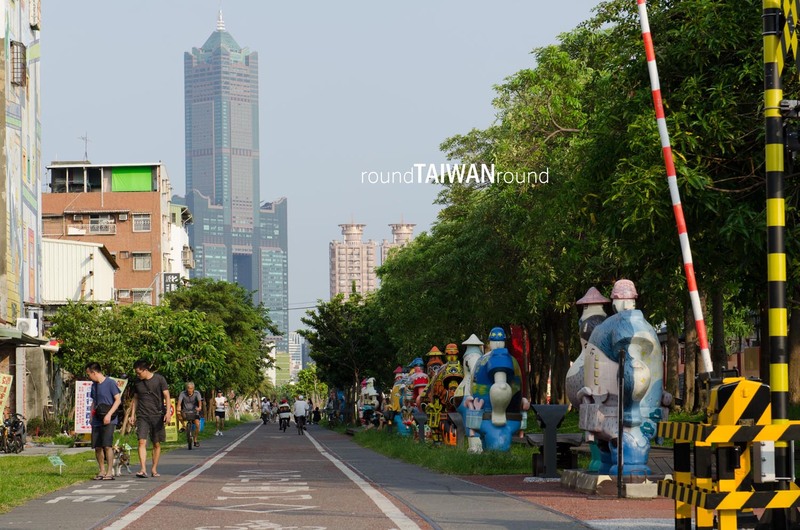
- Best for: Families who like photos, exhibitions, harbor views, and do not want to spend long hours in the vehicle.
- Route style: Short city transfers with a focus on galleries and harbor walks.
- Suggested departure area: Downtown Kaohsiung, Zuoying HSR Station, or Tainan City.
- Not recommended: Long midday outdoor exposure or making the Qijin ferry a mandatory stop.
Suggested route
|
Time |
Activity |
Details |
|---|---|---|
|
09:00 |
Depart from downtown Kaohsiung or Zuoying HSR Station |
|
|
09:30-11:20 |
Kaohsiung Museum of Fine Arts |
The Kaohsiung Museum of Fine Arts is an excellent first stop because much of the space is indoors, the route is relatively simple, and the amount of time spent there can be adjusted based on energy levels. The museum has accessible elevators, accessible restrooms, ramps, and wheelchair rentals. For seniors and wheelchair users, it is easier to slow down here than in a busy commercial district. |
|
11:20-12:00 |
Transfer to Pier-2 / Yancheng for lunch |
It is best to eat early and avoid the lunch crowd in Yancheng. On weekend afternoons, some popular restaurants have notably longer waits, so choose places with level entrances, elevators, or wider seating spacing whenever possible. |
|
12:00-13:30 |
Lunch around Yancheng or Pier-2 |
This period should stay relaxed. For wheelchair users and seniors, the most time-consuming parts are usually not the meal itself, but moving around, waiting for elevators, organizing belongings, and finding a restroom. If the restaurant is in a renovated old building, confirm in advance whether there are steps or narrow corridors so you do not have to change restaurants on the spot. |
|
13:30-15:20 |
Pier-2 Art Center |
The Da-Yong, Da-Yi, and Penglai sections of Pier-2 are mostly flat, making them suitable for a slow stroll. The park has accessible restrooms and ramps, but because the area is large, it is not a good idea to try to cover everything in one go. Instead of rushing through every exhibition space, leave room to rest, look at the sea, or take photos. Seniors will usually feel much more comfortable that way. |
|
15:20-15:50 |
Rest in the car and transfer to the Kaohsiung Music Center |
Treat this afternoon block as a short recovery break. If the weather is hot, the air-conditioned vehicle can help everyone regain some energy before a harbor walk. |
|
15:50-17:10 |
Kaohsiung Music Center / Love River Bay harbor walk |
The surrounding walkways are fairly wide, and the harbor views are open, so this is a nice place for a slow evening stroll. However, the sea breeze can be strong at times, so it helps to bring a windproof layer for seniors. If someone tires easily, it is perfectly fine to sit by the water instead of walking the full route. |
|
17:10-18:00 |
Return or drop-off at the hotel |
Tip: Accessible travel in southern Taiwan does not have to mean trying to cram in Qijin ferries, old streets, and beach stops all at once. For many seniors and caregiving families, the most comfortable trip is the one with shorter drives, enough rest, and no constant worry about whether the next stop will be too far or too tiring. |
Route comparison
| Route | Best for | Accessibility stability | Physical demand | Biggest variable | Recommended setup |
|---|---|---|---|---|---|
| Taipei city culture route | First-time accessible travelers, seniors, wheelchair users | High | Low | Weekend crowds, elevator waits in malls | Best on weekdays, with lunch in a mall or department store |
| Taichung nature and architecture route | Families who enjoy scenery, sunset, and architectural spaces | Medium-high | Medium | Wind and weather changes at Gaomei Wetlands | Treat Gaomei Wetlands as an optional bonus stop |
| Kaohsiung harbor and arts route | Photo lovers, exhibition visitors, harbor walkers | High | Medium-low | Summer heat and outdoor exposure | Keep midday indoors and leave the harbor walk for the evening |
Many accessibility problems are not caused by the attraction itself. They happen when you arrive and realize that the place cannot be entered, the restroom is unusable, or there is nowhere suitable to board and alight. Compared with filling the day with more attractions, checking the details in advance is usually more important.
- Check whether the wheelchair is foldable or whether a lift-equipped vehicle is needed.
- Confirm whether the passenger can stand briefly and transfer into the seat. This affects boarding and the vehicle type.
- Do not assume that a restroom is accessible just because there is a restroom on-site.
- Check whether the restaurant entrance has steps and whether the table spacing is wide enough for a wheelchair.
- Look for a convenient drop-off area near each attraction. For wheelchair travelers, the drop-off point is often more important than the parking lot.
- After about one to two hours of moving around, it is a good idea to let seniors rest and use the restroom.
- Outdoor attractions should always have a rainy-day backup plan, especially for wetlands, waterfronts, or large open parks.
- Do not pack the schedule too tightly. Many seniors feel that the most comfortable trip is one with fewer attractions and more breathing room.
📍You can also plan your route with the Tourism Administration's accessible travel guide.
Get a quote
Charter ServiceHow is accessible charter van pricing calculated? Prepare these 6 details before requesting a quote
When people look up accessible charter van pricing, they often ask, “How much is it per day?” But accessible charter pricing is usually not as simple as the lowest base fare, because the final cost depends on the vehicle type, distance, usage time, number of stops, wheelchair or mobility aids, and luggage space.
For example, two groups doing the same four-person day trip may need different vehicles if one group only has normal luggage while the other has a foldable wheelchair, a walker, and two large suitcases. Likewise, a North Coast day trip with only round-trip transport will differ from one that includes restaurants, attractions, and rest stops.
When comparing quotes, check the following first:
- Whether the vehicle fits the number of passengers, wheelchair, mobility aids, and luggage
- Whether the fare includes a basic amount of vehicle time
- Whether tolls and parking fees are extra
- How overtime is charged
- Whether last-minute changes or extra stops cost more
- Whether weekends, nights, or special time periods have different rates
If the pricing conditions are different, then charter pricing cannot really be compared directly. A cheaper-looking option can become less clear and more stressful if you do not confirm the vehicle type, time limits, inclusions, and itinerary details first.
Before requesting a quote, prepare these 6 details:
- Travel date and approximate vehicle usage time
- Pickup point and drop-off point
- Number of passengers and the senior traveler’s condition
- Whether you will bring a wheelchair, walker, or other mobility aid
- Number of bags and any large items
- Target attractions, restaurants, or the general direction of the trip
You do not need to fully finalize the itinerary at the beginning, but the provider should at least understand the basic conditions of the trip. That way, the estimate will be much closer to your actual needs and you can avoid choosing only by price, only to discover a mismatch in vehicle type, space, or cost on departure day.
Why use tripool first to confirm accessible charter van needs?

If you already have a rough departure area and a possible itinerary, but are not sure about the vehicle type or price, it is a good idea to use tripool for a quick check first.
Why? Because in the current accessible vehicle market, whether you are asking how much a rehabilitation bus costs or how much an accessible taxi costs, the process is often very cumbersome. You may need to add LINE, wait for customer service, or send an email and wait a long time for a reply. tripool is different. You only need to enter the following information:
👉 Pickup and drop-off points, number of passengers, whether you will bring large luggage items such as a foldable wheelchair and how many bags, the actual itinerary, and the usage time, and you can get an instant quote. It truly delivers: No LINE, no email, no card binding, no registration, and real-time pricing available 24/7!
You do not need a fully finalized route or every last detail. As long as you enter the departure point and the main destination, you can preview the fare first and get a clear sense of the trip budget.
Get a quote
Transfer ServiceFurther Reading:
- The Best Airport Transfer Guide for Travelers Landing in Taiwan: Pricing, Service Type & FAQs for First-Time Visitors
- Best 9-Seater Vans to Rent for Groups (With Luggage Space Tips)
- Private Car Rental Price List in Taiwan (2026 Updated) | The Most Comprehensive Price Guide for Renting a Car with Driver, Compare Vehicle Types and Rental Duration

How do you book tripool’s accessible charter van? Just 4 easy steps!

- Choose the transfer service you need and enter pick-up & drop-off locations
- Choose the number of passengers, luggage, and a vehicle
- Pick a date and a time
- Pay by your way
accessible charter van
tripool serviceFurther Reading:
Accessible charter van FAQ
Below are some of the most common questions people ask before arranging an accessible charter van. This section helps you quickly decide which transportation option fits your group and clarifies your needs before requesting a quote.
Q: Does having a wheelchair always mean you must book an accessible vehicle?
Not necessarily.
If the wheelchair is foldable and the user can transfer out of it into a vehicle seat, you can first check whether a regular charter van or a larger vehicle will work. In that case, the key factors are trunk space, the number of passengers, luggage volume, and how easy boarding will be.
But if the wheelchair cannot be folded or the user cannot transfer out of it, then a regular charter van is usually not the right choice. You may need a specialized vehicle or other accessible transportation arrangement, so it is best to confirm this before booking.
Q: Can a regular charter van carry a wheelchair?
Yes, but it depends on the wheelchair and the vehicle space.
If the wheelchair is foldable and there is not much luggage, a regular charter van or a larger vehicle, such as a 9-seater charter van, may work. But if there are several passengers, large luggage, walkers, or a stroller, you need to reassess whether there is enough room.
When asking, it helps to be specific about:
- Whether the wheelchair is foldable
- Whether the passenger can transfer independently
- The number of passengers
- The amount of luggage
- Whether there are any other mobility aids
This is much more effective than simply asking, “Can it carry a wheelchair?”
Q: Will the driver push the wheelchair or accompany us into attractions?
Not always. It depends on the service details. A charter driver is usually responsible for transportation, boarding and drop-off coordination, and route support, but not necessarily for accompanying guests inside attractions, pushing a wheelchair for long periods, or providing caregiving assistance. If extra help is needed, explain that before booking and confirm whether it can be arranged and whether it costs extra.
Q: Is a one-day trip suitable for seniors with limited mobility?
Yes, but the schedule should not be too full.
If seniors simply cannot walk far, get tired easily, or need more time for boarding and boarding-related movement, a one-day trip is still possible. The important thing is to keep the number of attractions low and leave enough time for rest, meals, and transfers.
A better structure is one main attraction in the morning, a restaurant that is easy to enter at lunch, and one lighter attraction or rest stop in the afternoon. Do not build the trip so every stop is only a quick glance. That will exhaust both seniors and caregivers.
Q: How far in advance should I book?
The more special your needs are, the earlier you should book.
If it is a standard charter trip, there may be more flexibility. But if there is a wheelchair, walker, lots of luggage, or a specific vehicle requirement, do not wait until the last minute. Holidays, long weekends, summer vacation, winter vacation, and peak travel seasons all affect vehicle and driver availability.
A safer approach is to ask about the vehicle type and pricing as soon as the date and rough itinerary are decided, even if the full itinerary is not finished yet.
Q: What happens if we change the itinerary or run over time?
That depends on the service rules and the vehicle schedule on the day.
Common last-minute changes in accessible travel include seniors wanting more rest, lunch taking longer than expected, attractions being too crowded, or bad weather requiring an indoor backup. All of these can affect both time and price.
So before booking, make sure you understand:
- How overtime is charged
- Whether changing the route at the last minute is allowed
- Whether extra stops cost more
- Whether the return time is flexible
- Whether parking and tolls are included
The earlier you confirm the rules, the less likely there will be disputes on the travel day.
Q: When should I ask first instead of booking directly?
It is better to ask first in these situations:
- The wheelchair cannot be folded
- The passenger cannot get in and out independently
- You have a walker, oxygen machine, or large mobility aid
- There are many passengers and a lot of luggage
- The senior cannot walk for long or gets tired easily
- The itinerary includes multiple attractions
- You are not sure whether the attractions allow easy boarding and drop-off
- You want to know whether a standard vehicle will be enough
- You need to confirm whether parking, tolls, or overtime are included
Whenever vehicle type, space, boarding, or pacing is involved, do not choose based on price alone. Asking first is usually the easier path.
If the wheelchair cannot be folded or the passenger cannot transfer independently, contact customer service directly and share the wheelchair type, number of travelers, and planned itinerary so they can help assess whether a suitable vehicle is available.
Traveling with an accessible charter van can be this simple

The point of an accessible charter van trip is not to pack the schedule full. It is to let seniors, wheelchair users, or family members with limited mobility complete a trip in a steadier, less stressful way with fewer transfers and more control.
What matters most is not worrying all the time or rushing all the time.
If you already have a general direction in mind but are still unsure about the vehicle type or the best setup, start by organizing the departure point, the number of passengers, and the places you want to visit. That usually makes it much easier to find the right solution.